The Quiet Revolution in American Wellness: Who Fitness Is For
American wellness has spent the better part of three decades selling a particular vision of what health looks like. The vision has been consistent: young, vigorous, aesthetically optimal, and largely untouched by the ordinary wear of a full life. It has been persuasively packaged in activewear campaigns, wellness influencer aesthetics, and the design of every aspirational gym that has opened in a trendy urban neighborhood. It has also been, for most of the actual American population, a vision that describes someone else.
The slow unraveling of this vision is not happening because fitness companies have decided to be more inclusive out of moral conviction — though some have. It is happening because the demographics of who needs physical activity services and who can be served profitably have both expanded in ways that make the old image economically untenable, not merely culturally limiting. The business case for a narrowly defined fitness market has weakened, and the industry is, sometimes reluctantly, adapting.
What is replacing the old story is not a single new story. It is a more accurate account of what fitness actually looks like when it is designed for the full range of human bodies, life stages, and geographical realities. The institutions, tools, and programs doing that work most effectively share one quality: they start with the actual needs of actual people, and they build from there.
Reaching the Forgotten Market: Older Adults
For a population that has spent decades being treated as a footnote in fitness marketing, older Americans have turned out to be one of the most motivated and consistent client bases in the business. The reasons are not hard to understand. Adults in their 60s, 70s, and 80s have more time available to invest in their health than adults raising young children or managing demanding careers. They have often watched peers decline from preventable conditions and are motivated by real-world evidence of what happens when movement stops.
The challenge has always been the design of the offerings themselves. Standard fitness programming, calibrated for bodies in their 20s and 30s, is often inappropriate or physically inaccessible for older adults managing aging joints, reduced balance, and chronic medical conditions. The solution is not to simplify the goal — it is to redesign the delivery.
The modality known as Chair Yoga for Seniors sits at the intersection of accessibility and therapeutic effectiveness in a way that many conventional fitness formats do not. It delivers meaningful improvements in range of motion, core stability, and body awareness without requiring participants to lower themselves to a mat from standing, to bear weight through compromised joints, or to follow a pace that exceeds what their system can safely manage. The seated format is not a compromise — it is an intentional design choice that makes genuine benefit available to people who otherwise could not access it.
The growth of senior-focused movement programming has also surfaced a clarifying truth about what people at that life stage actually want from exercise. It is not aesthetics. It is capacity — the ability to carry groceries, play with grandchildren, navigate their own homes, and live independently for as long as possible. Programs that are honest about delivering those concrete outcomes tend to build the kind of loyalty and consistency that the mainstream fitness industry has never quite figured out how to earn.
Getting Kids Started Right
The other end of the age spectrum presents a different but equally significant challenge. The physical activity crisis among American children is not a new story, but its current form is more acute than it was twenty years ago. Screen time is up. Physical education funding is down. The outdoor spaces where previous generations developed movement competence organically have been reduced, restricted, or simply made structurally unavailable by how contemporary suburban life is organized.
What is less commonly discussed is how early the consequences of this deficit show up. Children who have not developed basic movement patterns by early adolescence face genuine barriers to physical activity — not because they lack motivation, but because the neurological windows for certain kinds of motor learning are narrower than they appear from the outside. A ten-year-old who has never learned to coordinate a jump or a balanced landing is not starting from zero. They are starting from behind, in ways that compound.
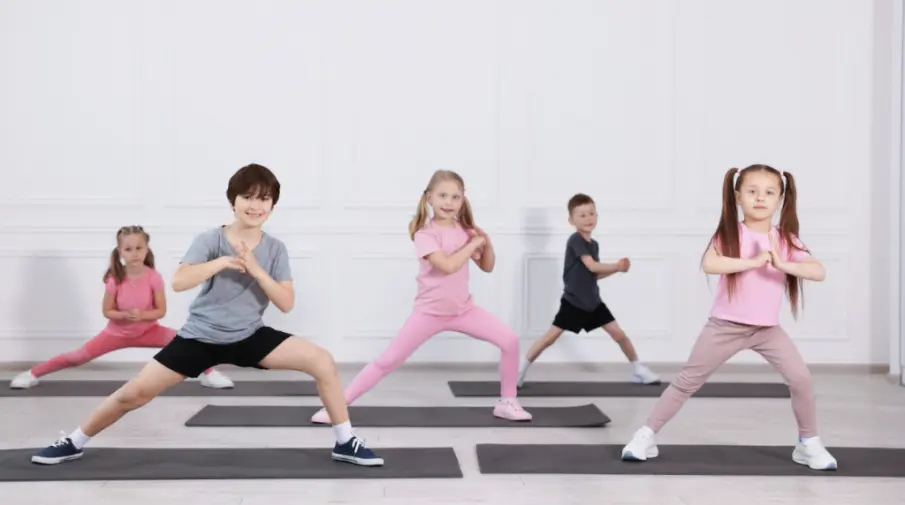
Programs centered on Fitness for Kids and built around developmental science rather than merely supervised activity address this reality directly. They understand that physical competence in children develops sequentially — you cannot establish complex coordination before the simpler patterns that underlie it are solid. They also understand that the social environment of the program matters enormously: a culture that makes effort feel safe rather than embarrassing, and that celebrates improvement over comparison, is laying a foundation that organized sports often struggle to replicate consistently.
The long-term returns on this investment are not visible in the short term. But the evidence is consistent: a child who develops a positive and competent relationship with movement early is far more likely to remain physically active through adolescence and adulthood. That is one of the most reliable levers available for improving long-term population health, and it is one the fitness industry has historically underinvested in.
Making Specialized Training Portable
The middle generation — working adults managing careers, children, aging parents, and the thousand other demands of mid-life — faces a fitness access problem that is as much about time as it is about geography or money. Quality instruction has historically required showing up at a specific location, at a specific time, with a schedule that many people simply cannot maintain across a full year.
A well-designed kettlebell app navigates this constraint more effectively than most fitness technology products manage to. The reasons are specific to the modality: kettlebell training is grounded in a relatively small number of foundational movements, which means it can be coached with genuine rigor through a structured digital format without requiring the constant in-person feedback that many other training styles genuinely need. Progressive programming, clear technique instruction, and community features can be delivered through a well-built platform in a way that produces real outcomes — not just engagement metrics.
The more thoughtful products in this category have also recognized that accountability architecture matters as much as programming quality. A user who trains in isolation is far more likely to stop than one embedded in a community — logging progress, receiving feedback, participating in challenges, and interacting with coaches and peers in real time. The best platforms have built both dimensions with care, and the difference shows in how long their users stay.
This form of coaching access matters especially for populations in smaller cities, rural areas, and communities where specialty fitness instruction has historically been difficult or impossible to find. The digital format removes the geography constraint without removing the coaching quality — which is, in the end, the only part that actually produces results.
The Rise of the Mobile Fitness Gym
There are communities in this country that have never had a gym, and in all likelihood never will. Not because the people there do not want one or would not use it, but because the economics of commercial real estate do not point toward them. The math of building and staffing a fitness facility assumes a density of financially qualified potential members within a reasonable radius. When that density is not there, the commercial gym does not materialize. The community goes without.
The mobile fitness gym exists because this problem is real and the conventional solutions to it have not worked. Bringing professional fitness equipment and instruction directly into communities removes the infrastructure dependency that has historically excluded large segments of the population. It also enables a responsiveness and flexibility that fixed facilities structurally cannot offer — a mobile operation can serve a rural county on Monday, a low-income urban neighborhood on Wednesday, and a corporate campus on Friday, calibrating its programming and equipment to each context.
This flexibility is not a weakness. It is the defining feature. A mobile fitness gym that operates consistently in underserved communities over time is not just delivering a product — it is establishing that physical health is worth investing in, and that this community deserves the same quality of service as any other. That shift in frame matters beyond the exercise itself. Communities that have been excluded from wellness culture do not just need equipment. They need to be treated as though their health is worth the same attention and resources as everyone else's.
For senior populations who no longer drive, for children in schools with eliminated PE programs, for workers in industrial facilities without nearby amenities — the mobile fitness gym offers something that a static business model never could: the ability to meet people exactly where they are.
The Fitness Industry's Next Chapter
The revolution in American wellness is quiet because it is not happening on the marketing channels where industry revolutions usually get announced. It is happening in community centers where older adults are discovering that they can still get stronger. In neighborhood programs where children are learning that movement can be joyful rather than punitive. In digital platforms where working adults are finding real coaching at a price and on a schedule that actually works. And in mobile units parked in the lots of communities that commercial fitness has never bothered to serve.
None of this constitutes the end of mainstream gym culture. The big-box facility is not going anywhere, and it serves a real population reasonably well. But its position as the default answer to the question of how Americans exercise is being steadily challenged by a set of alternatives that are each more appropriate to a specific context than a general-purpose facility can ever be.
The people building these alternatives share, at their best, a common orientation: they start with the actual human being in front of them — their age, their capacity, their context, their goals — and they build from there. That is not a revolutionary principle. It is simply good design. It turns out that applying it to the fitness industry, consistently and seriously, is a more transformative act than it sounds.
More to Read:







Previous Posts: